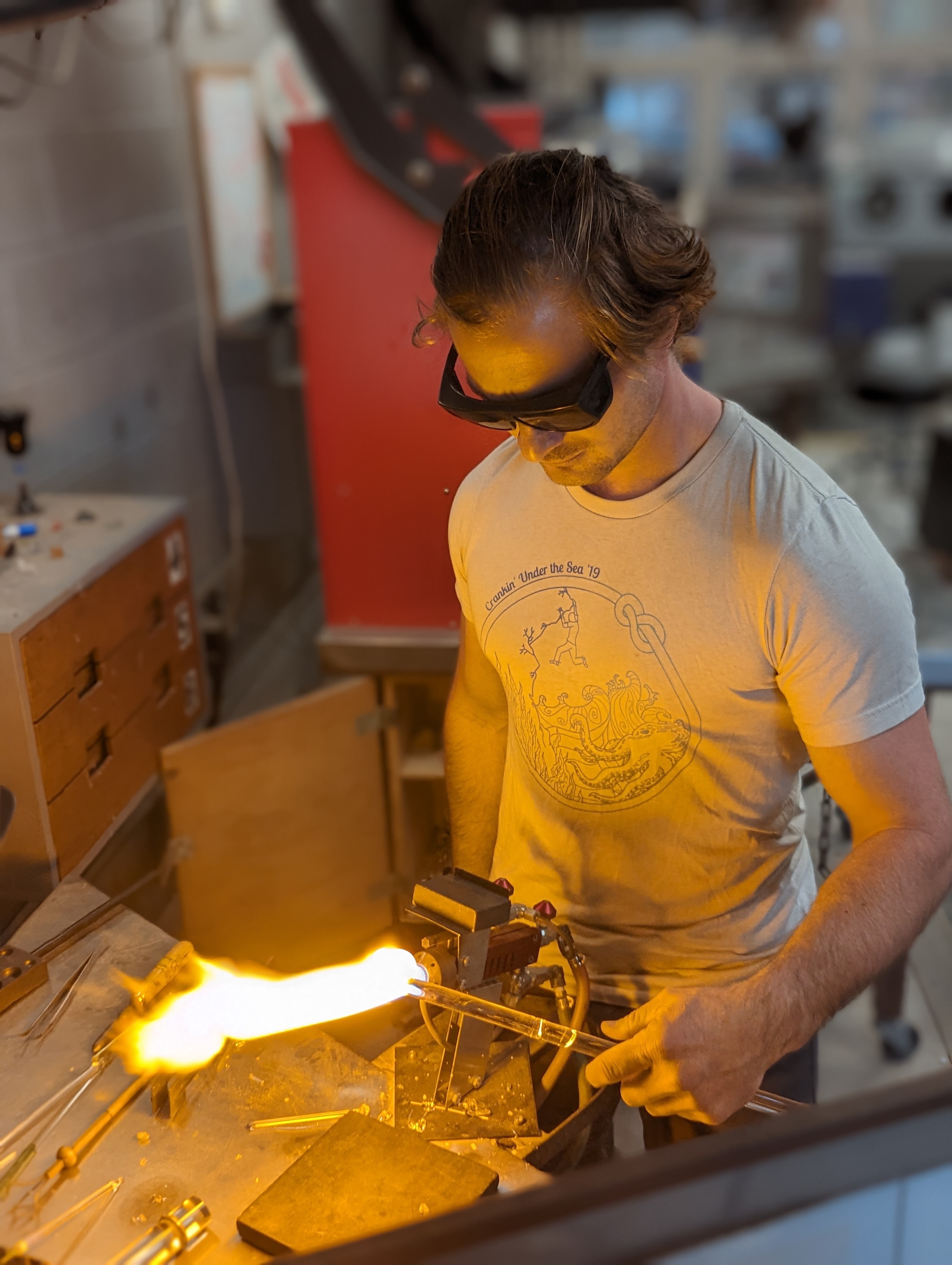
I’ve had the immense fortune to be in the right place at the right time to learn the ancient art of glassblowing at a steeply discounted price.
Furnace glass
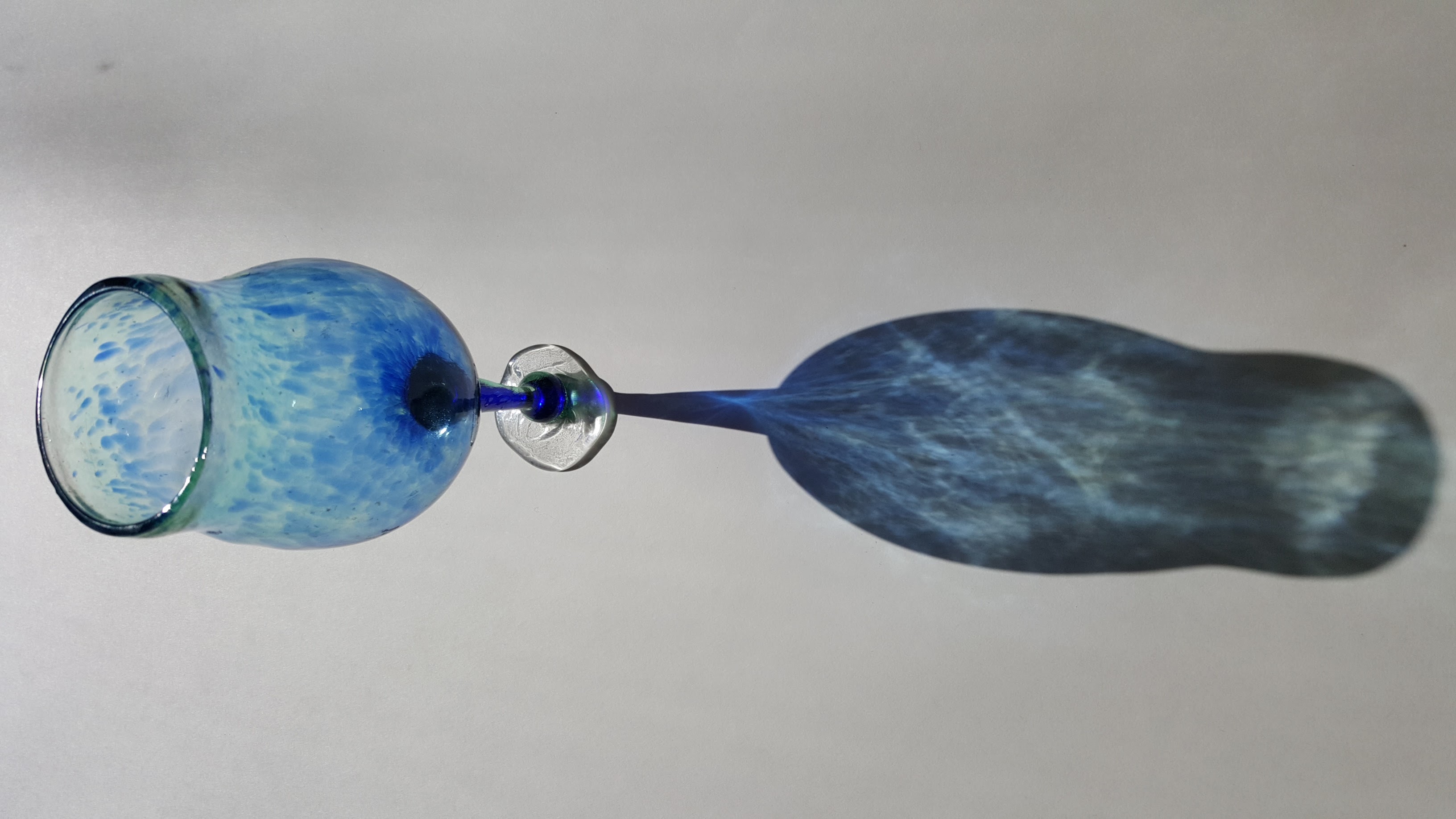 I first learned Furnace Glass in undergrad at one of the few schools that has a furnace studio that a random science major can just take classes at and then start using whenever it was free - so I ended up being an odd duck that usually works alone in an art style mostly performed in a team.
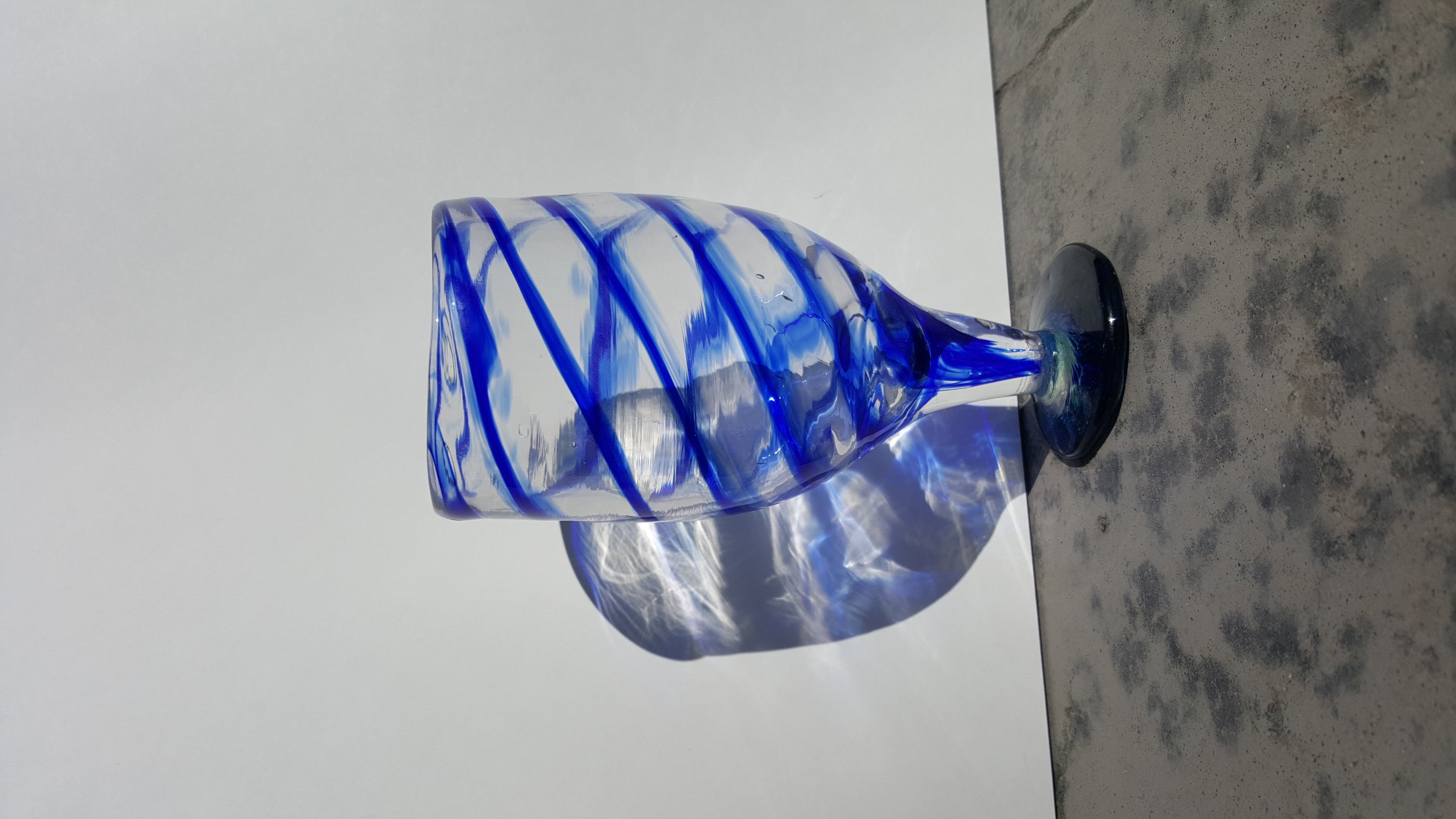
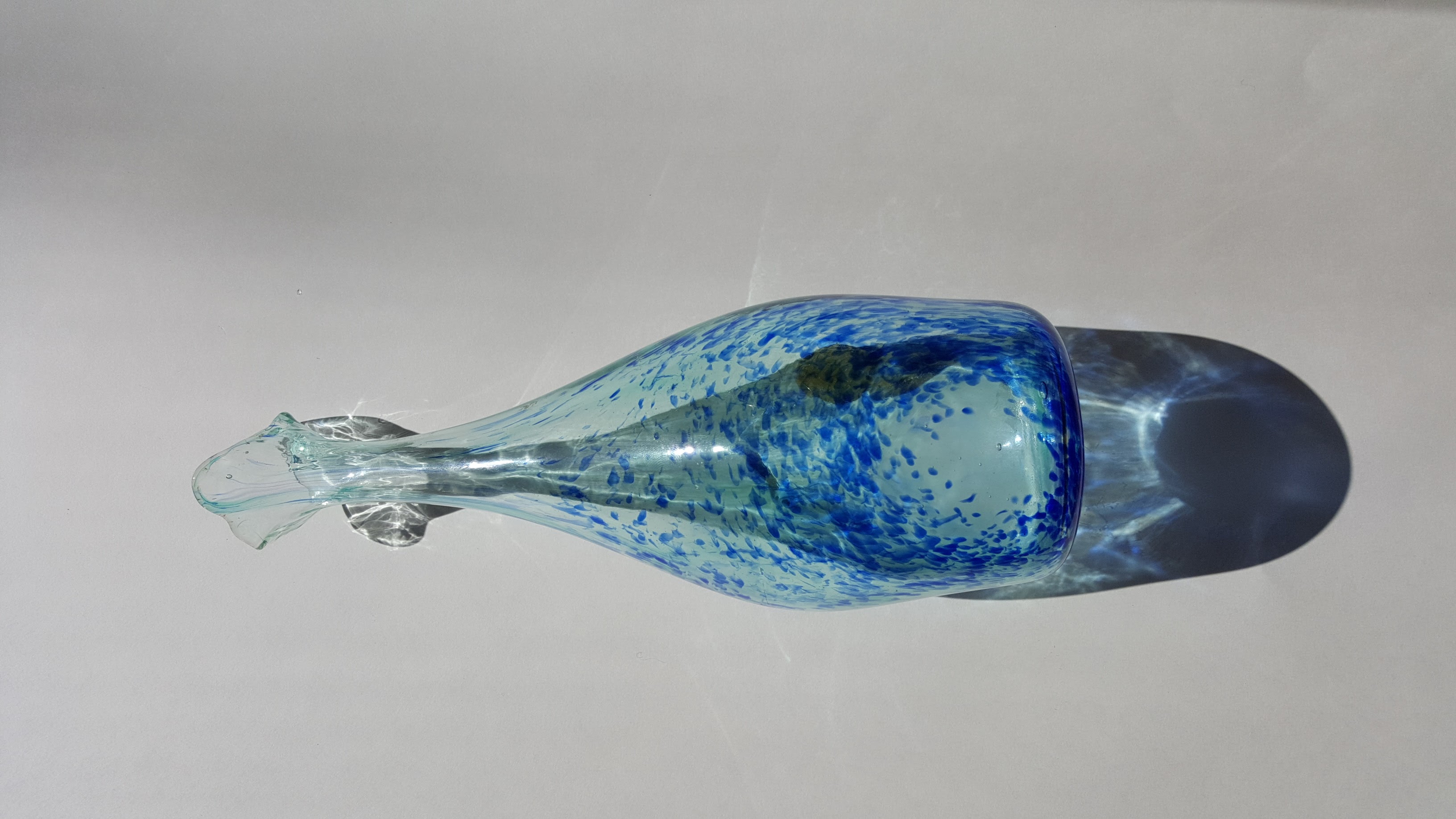 Furnace glass still follows the basic process developed in ancient Rome: start with a pot of glowing golden liquid glass in the furnace, then use ~2m long metal rods and tubes to gather it, shape it, and blow it into hollow vessels.
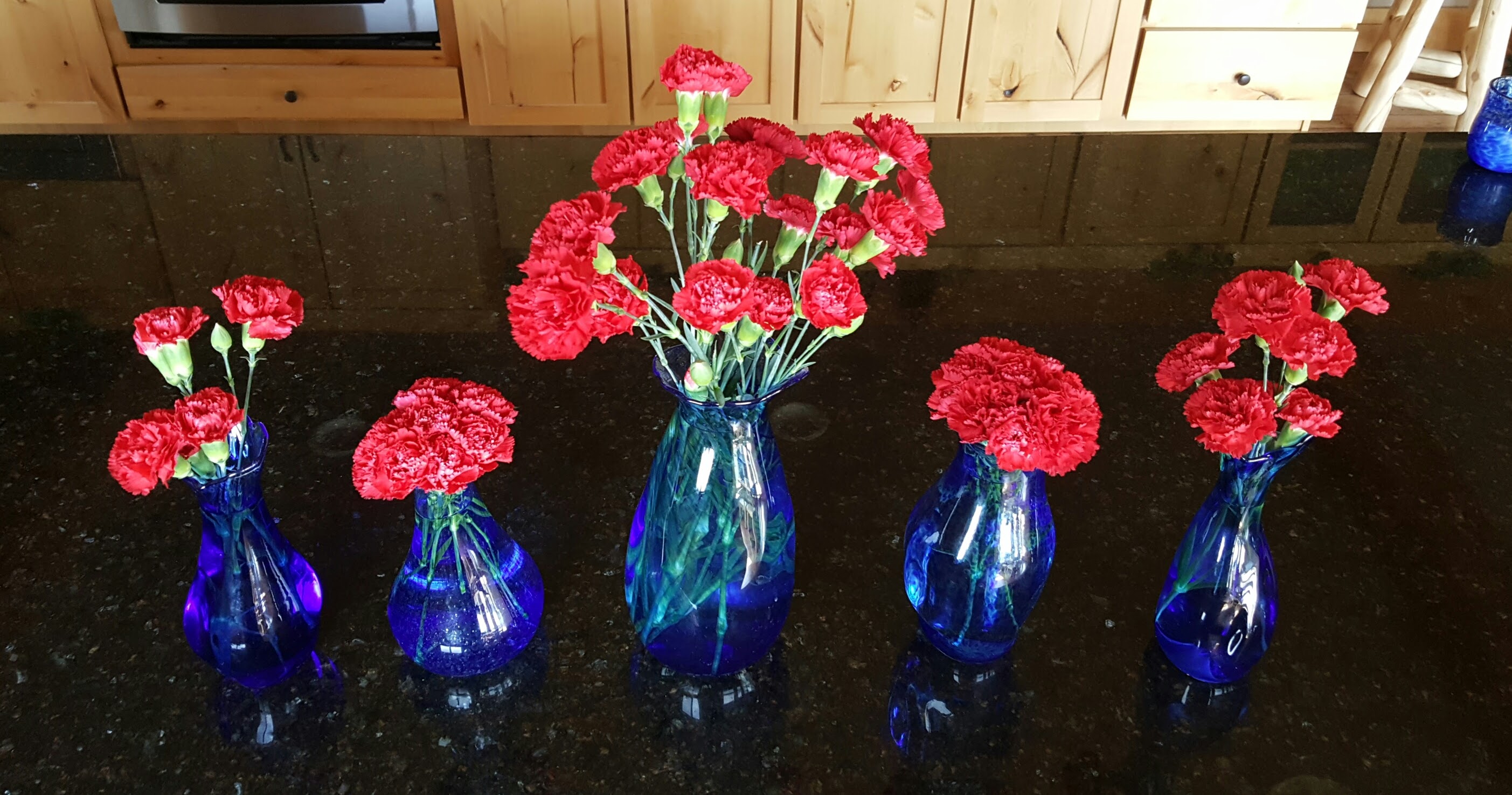
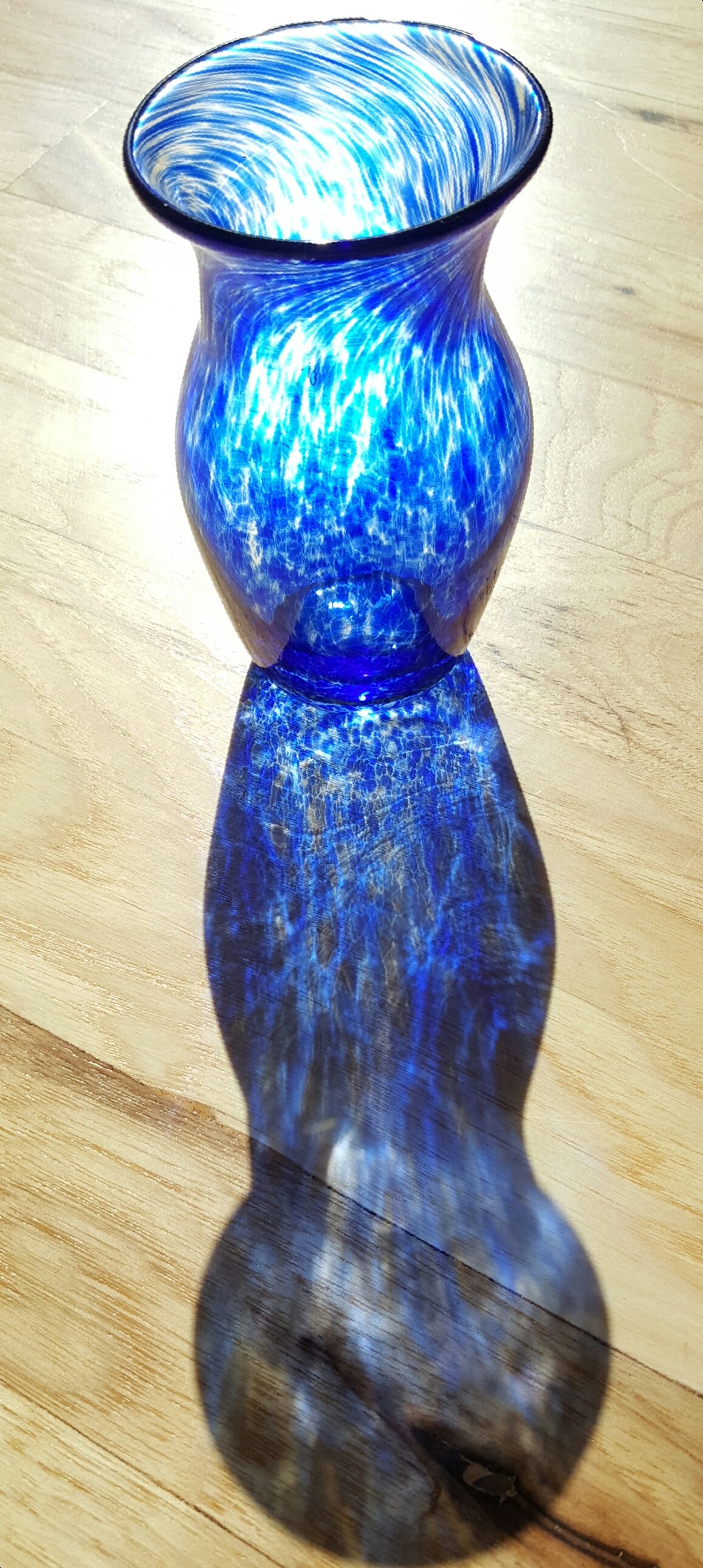 I love the process of furnace glass, and I love how big you can work - wineglasses and vases are very reasonable projects, most of the glasses in my kitchen are projects I made.
Torchwork glass
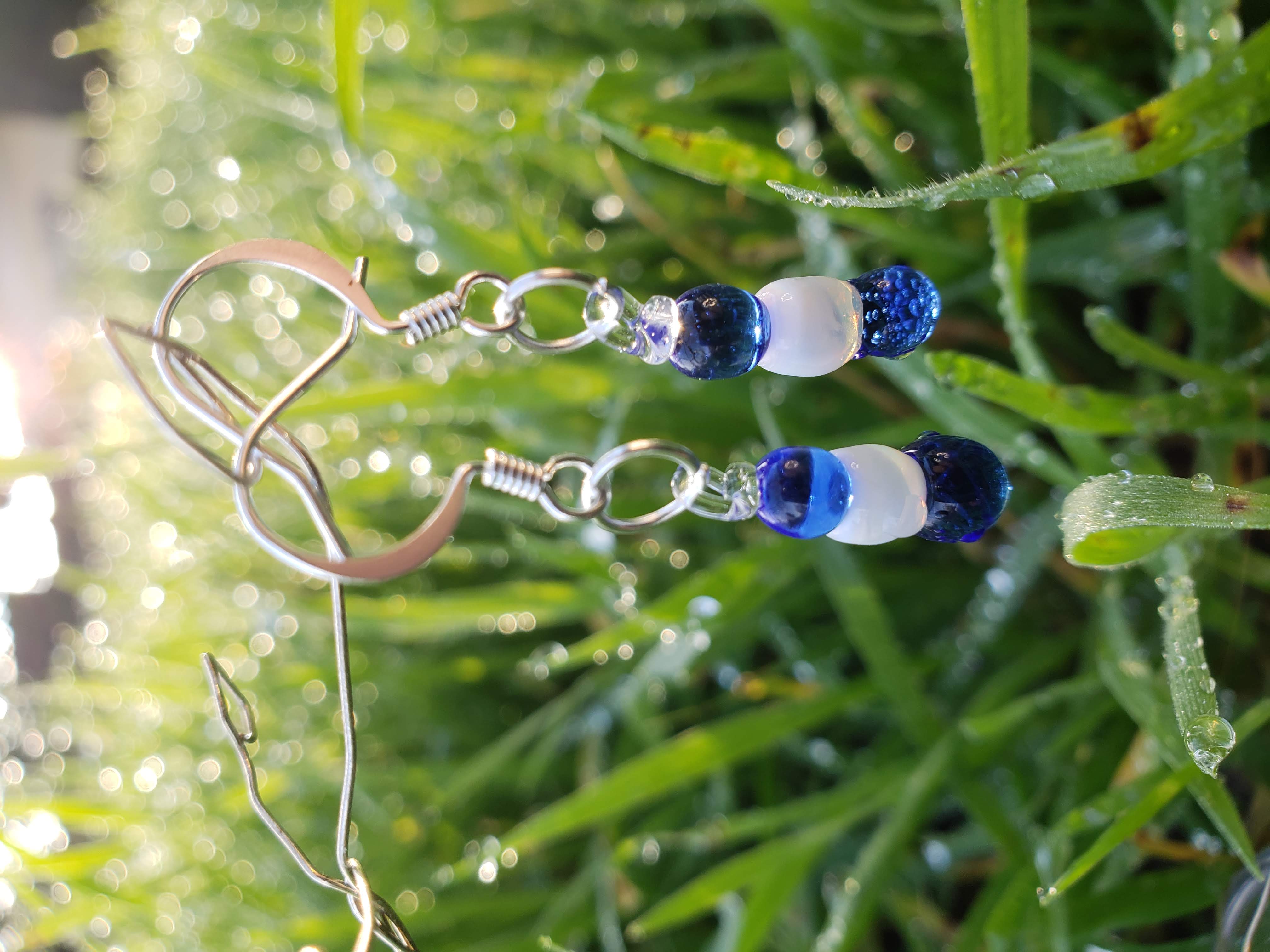 Unfortunately, furnace studios are hard to get access to for a reasonable price, so after moving away I needed to learn a cheaper style that doesn't have the insane fuel costs of constantly keeping that pot of liquid gold a thousand degrees and therefore liquid.
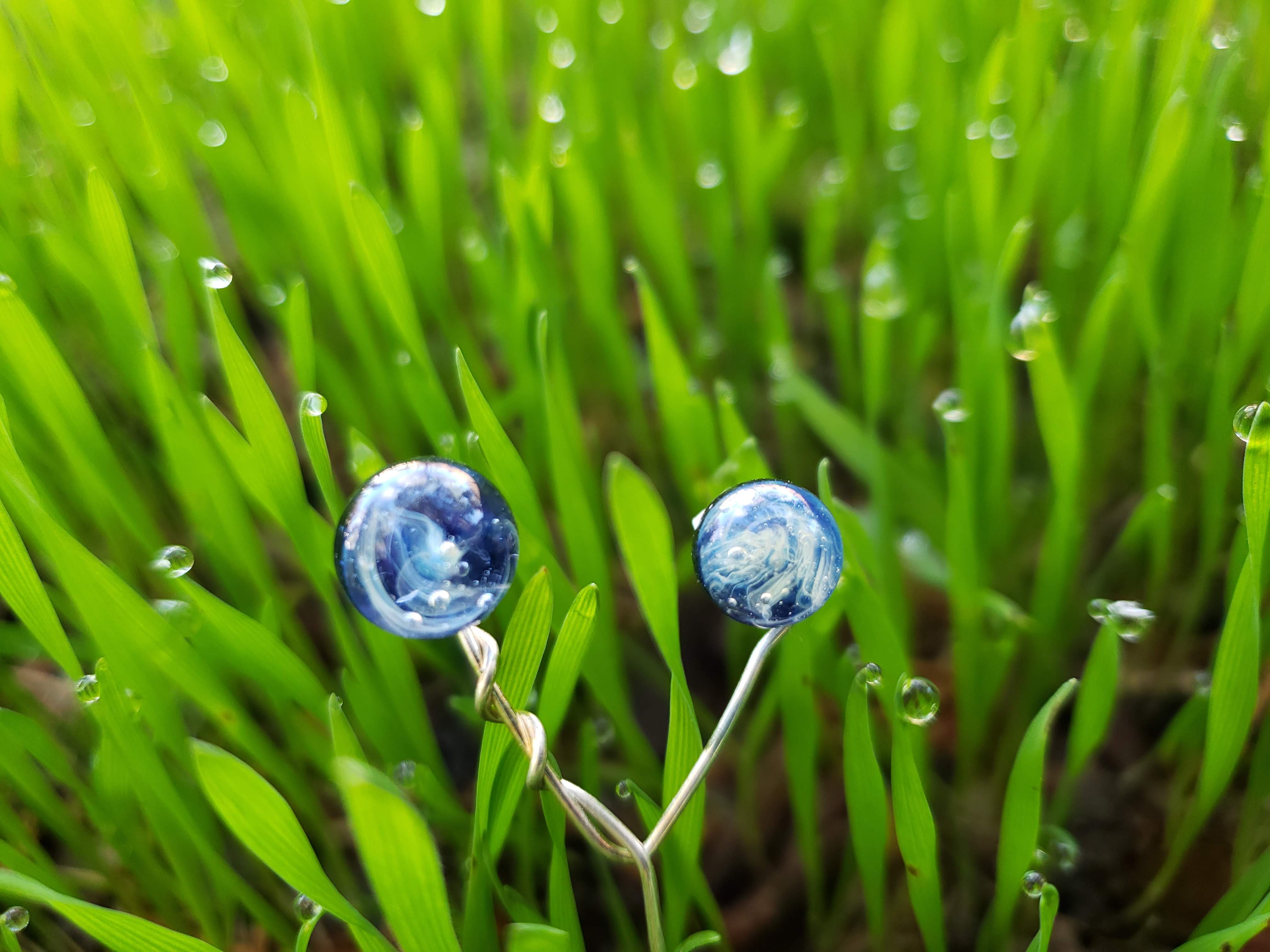
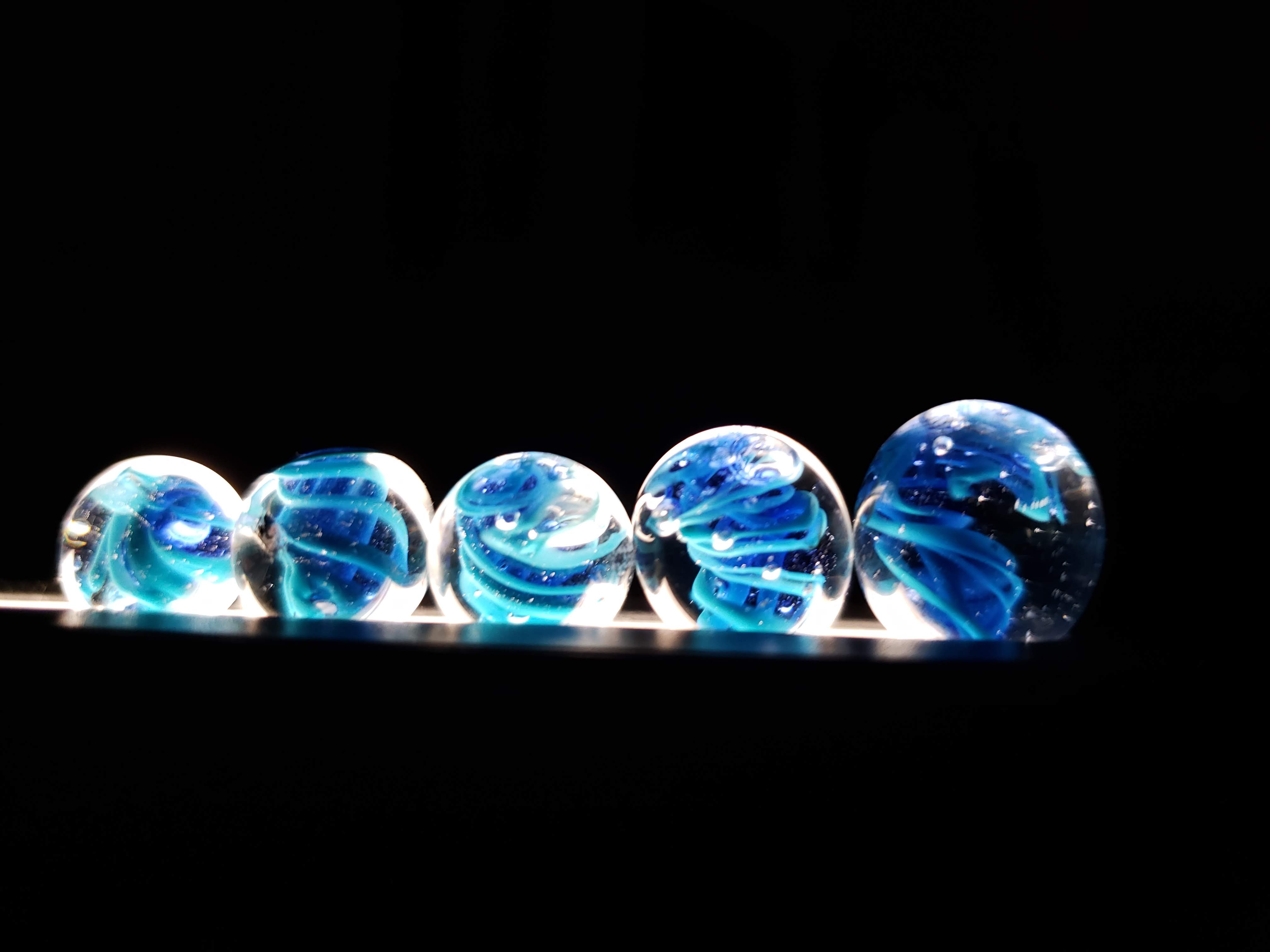
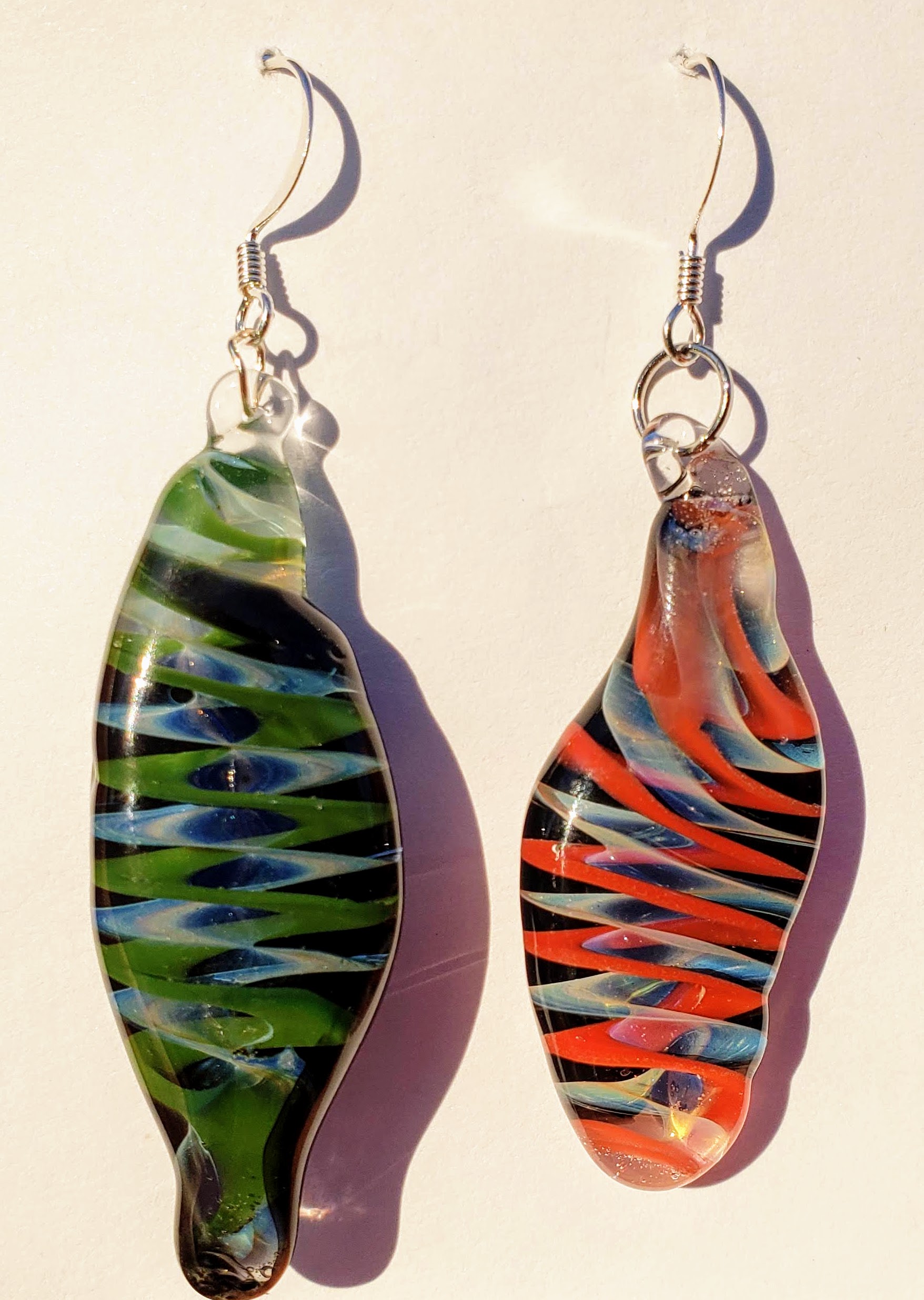
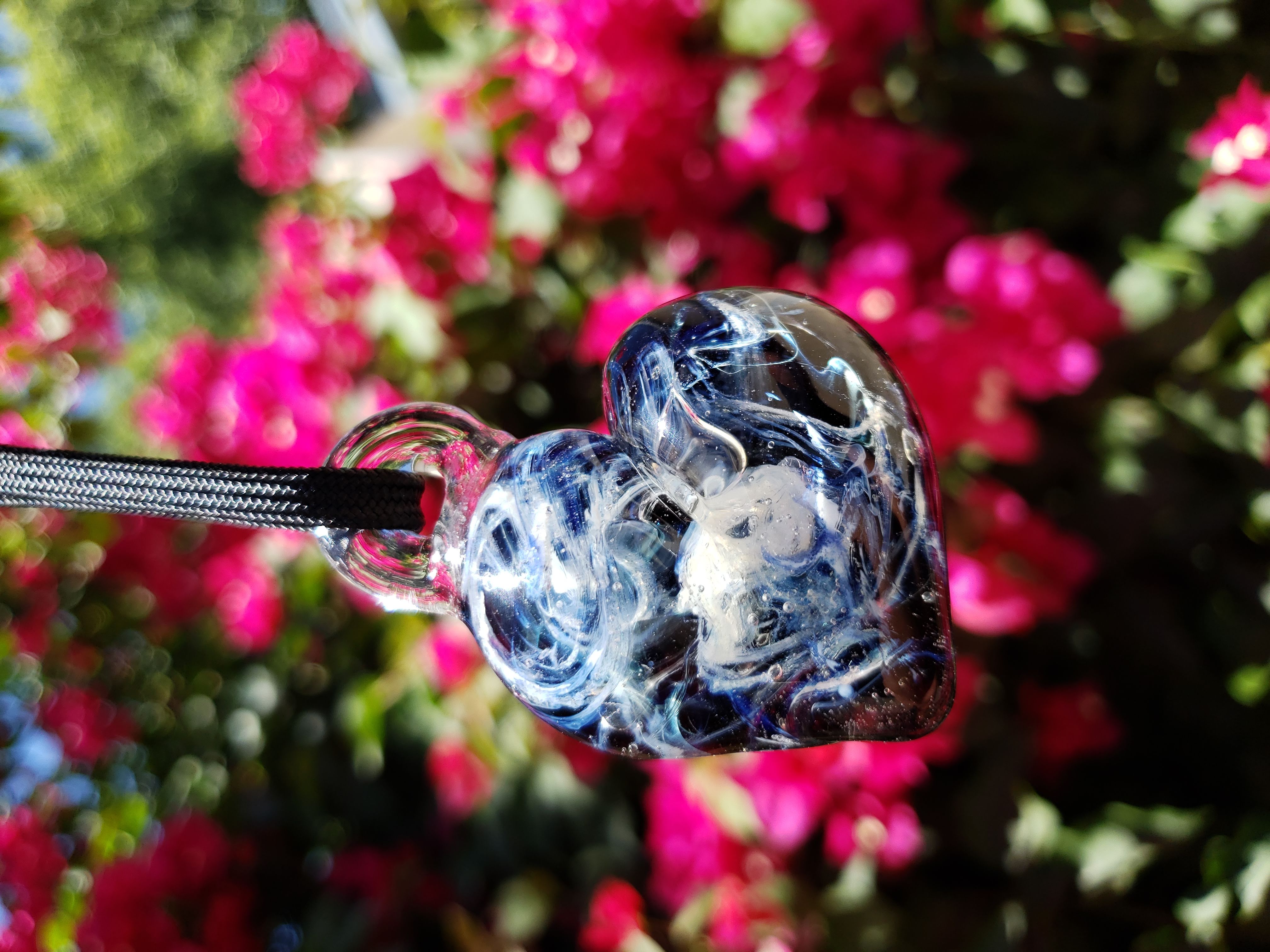 Starting in Cambridge and really taking off at the UC Davis Craft center, I’ve picked up a more modern and cheaper form of glass: torchwork. In this style, you start with solid cylinders and tubes of glass at room temperature, which you heat and manipulate with a powerful oxygen-fed torch. It’s hard to make things much bigger than a shotglass, but excellent for small detailed work like earrings and necklace pendants.
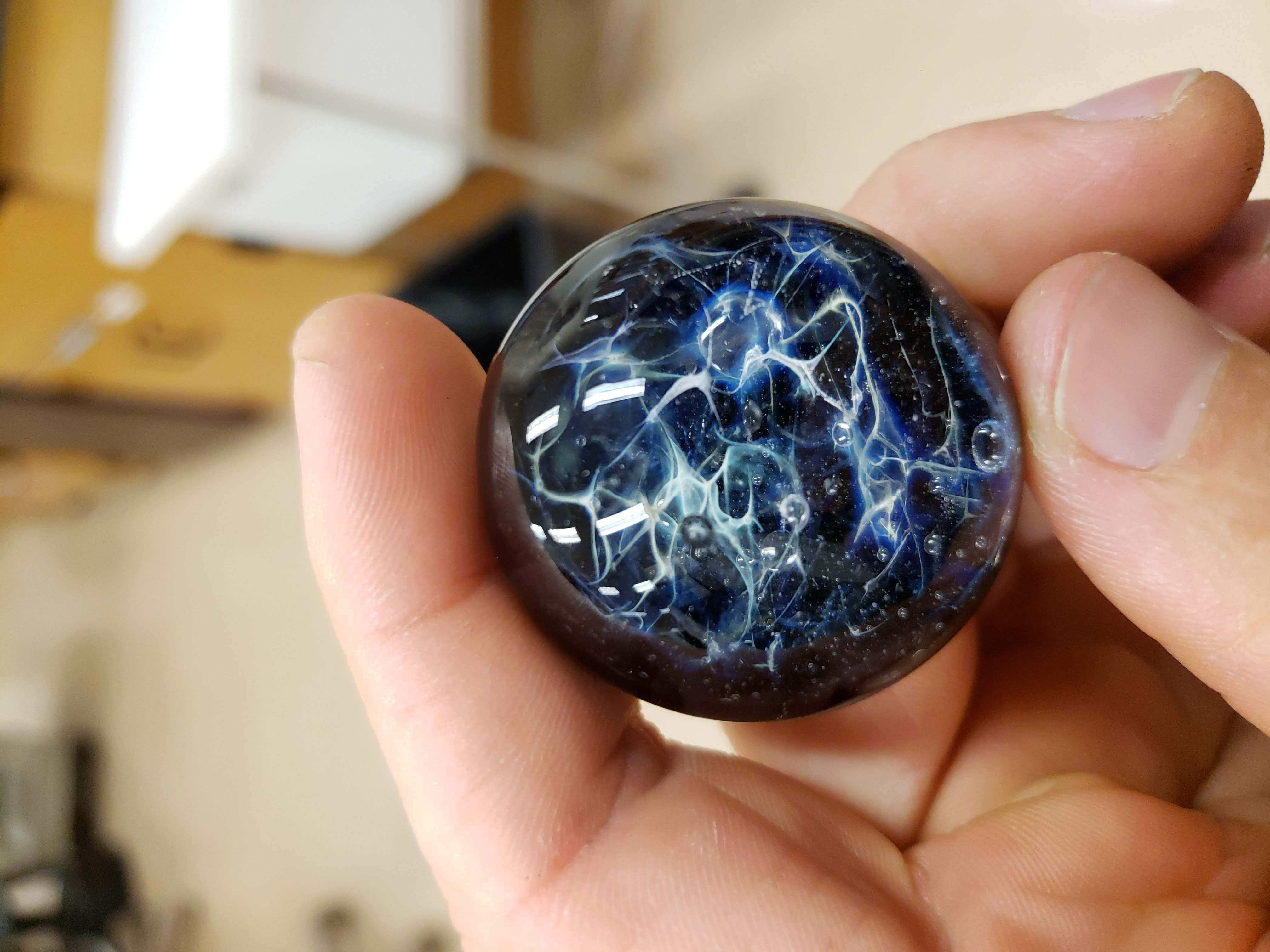
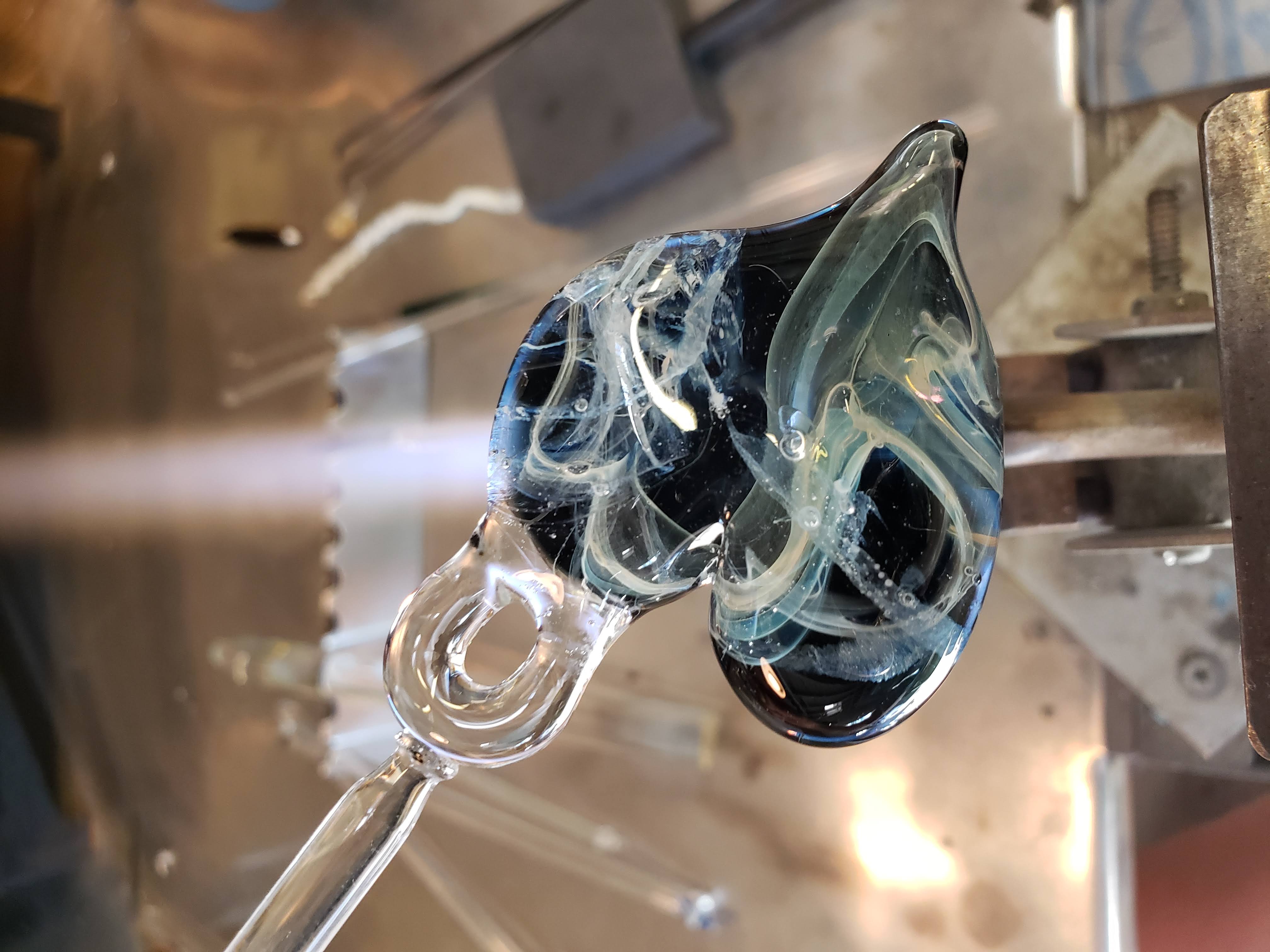 Since the chemistry of the torch is also very adjustable, there are some very insteresting alchemical processes available for making color - one of my favorites involves vaporizing silver in the torch and holding hot glass behind it to gather up the particles, which depending on the amount of oxygen used to feed the flame can make a wide range of colors, often generating very interesting “ethereal space” vibes.